

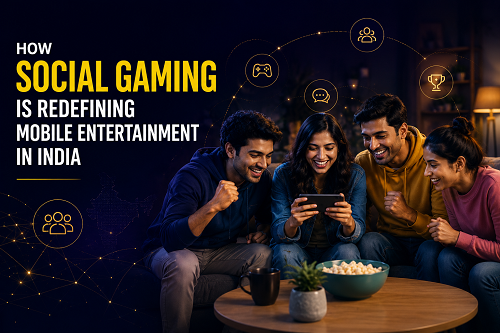
Mobile entertainment in India has undergone a remarkable transformation over the last few years. While streaming platforms and social media continue to attract millions of users, another category is quietly changing the way Indians spend their leisure time, social gaming.
 |
How Social Gaming Is Redefining Mobile Entertainment in India
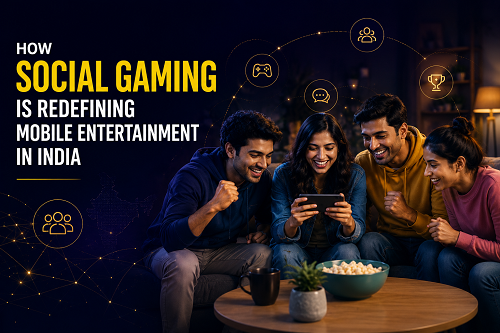
Unlike traditional mobile games that focused primarily on individual gameplay, social gaming combines entertainment with real-time interaction. Whether it’s competing against friends, challenging family members, or joining multiplayer matches with players across the country, gaming has become a shared experience rather than a solitary one.
This shift is redefining what mobile entertainment means for Indian users.
The Rise of Social Gaming
India is one of the world’s largest mobile gaming markets, with over 8.45 billion game downloads recorded during FY 2024-25, according to the Sensor Tower. As smartphone adoption continues to grow and internet access becomes more widespread, users are increasingly looking for experiences that go beyond passive entertainment.
For many, simply watching videos or scrolling through social media is no longer enough. Today’s users want to participate, compete, communicate, and connect. Social gaming delivers exactly that by bringing together elements of entertainment, interaction, and friendly competition.
Unlike conventional games where players compete against AI or play alone, social gaming encourages real-time multiplayer experiences that make every session more engaging and dynamic.
From Solo Play to Shared Experiences
One of the biggest reasons behind the popularity of social gaming is its ability to recreate the feeling of playing together, regardless of physical distance.
Games like Ludo, Carrom, and Snakes & Ladders have long been a part of Indian households. Today, these familiar board games have found a new life on smartphones, allowing friends and families to continue enjoying them even when they are in different cities.
Features such as play with friends, multiplayer matching, and instant rematches have transformed gaming into a social activity rather than just another mobile app.
Instead of simply playing to pass the time, users are creating shared moments, celebrating victories, and staying connected through gameplay.
Why Indian Players Are Choosing Social Gaming
Several factors are contributing to the growing popularity of social gaming in India.
-
Players today prefer experiences that are:
-
Free to play
-
Quick and easy to start
-
Accessible from anywhere
-
Multiplayer by design
-
Built around friendly competition
-
Interactive and community-driven
These preferences align with changing lifestyles where users often look for short entertainment breaks during the day instead of spending hours on a single activity.
Social gaming offers the flexibility to play a quick match during a commute, challenge friends over the weekend, or simply unwind after work without requiring a long time commitment.
How Platforms Are Responding
As player expectations continue to evolve, gaming platforms are introducing features that place social interaction at the center of the experience.
Platforms are moving beyond simply offering games and are instead building communities where players can compete, interact, and return regularly because of the people they play with – not just the game itself.
One example is Zupee, which has expanded its focus on free-to-play, skill-based gaming experiences that encourage social interaction through multiplayer gameplay and play with friends features. By allowing users to connect with friends, participate in real-time matches, and enjoy quick gaming sessions, the platform reflects the broader direction in which India’s mobile gaming ecosystem is evolving.
The platform has also built one of the country’s largest gaming communities, with over 100 million users, and is currently ranked among the Top Free Board Games on the Google Play Store, highlighting the growing demand for social gaming experiences.
More Than Just Playing Games
The appeal of social gaming extends beyond entertainment.
For many users, it has become a way to stay connected with friends and family, particularly when physical gatherings are not possible. Friendly competition, shared achievements, and regular interactions create a sense of community that traditional single-player games often cannot provide.
This evolution mirrors broader changes in digital entertainment, where users increasingly prefer interactive experiences over passive consumption.
As a result, social gaming is becoming an important part of India’s digital lifestyle, sitting alongside streaming platforms, messaging apps, and social networks.
Looking Ahead
India’s gaming industry is expected to continue growing as smartphones become more powerful and internet connectivity reaches even more users across the country. At the same time, player expectations are also evolving.
The future of mobile gaming is unlikely to be defined solely by better graphics or larger game libraries. Instead, success will increasingly depend on creating experiences that bring people together.
As platforms continue to invest in multiplayer gameplay, community-driven features, and free-to-play experiences, social gaming is well positioned to become one of the defining forms of digital entertainment in India.
For apps like Zupee, this represents more than a product evolution, it reflects a broader shift in how millions of Indians choose to play, connect, and spend their time online.